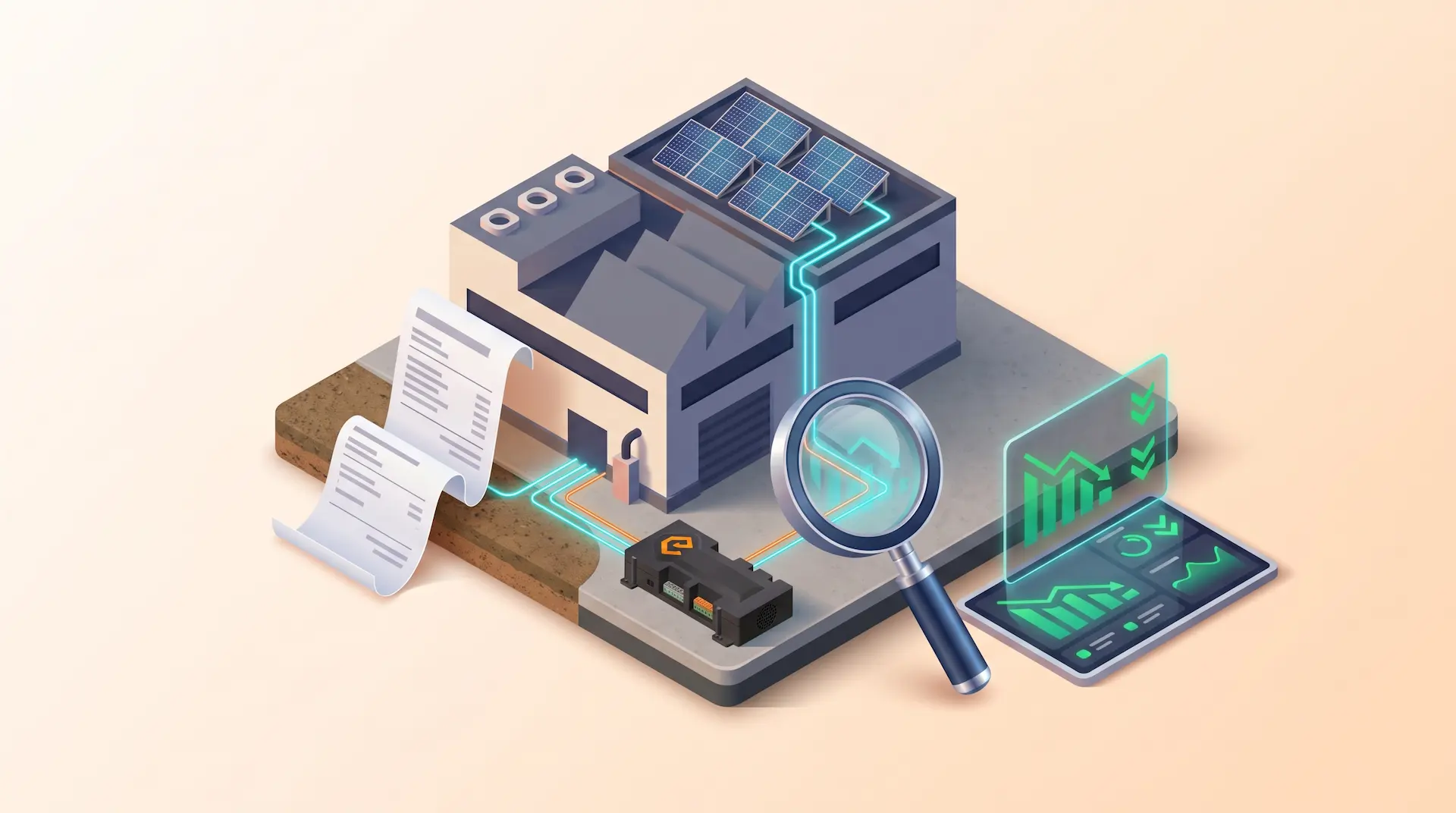

How much does an energy management system cost in Pakistan?
What drives the cost of an industrial energy management system in Pakistan, what to ask suppliers, and how to start small without overspending.
- Published
- Reading time
- 4 min
On this page7 sections
There is no single price for an energy management system (EMS). Two factories of the same size can get very different quotes, because the cost depends on what you want to measure, what you already have installed and how the system is deployed.
This guide explains what drives the price, so you can compare quotes properly and avoid paying for things you don't need.
What an energy management system includes
An industrial EMS has three parts:
- Measurement: energy meters, sensors and the controllers already on your machines.
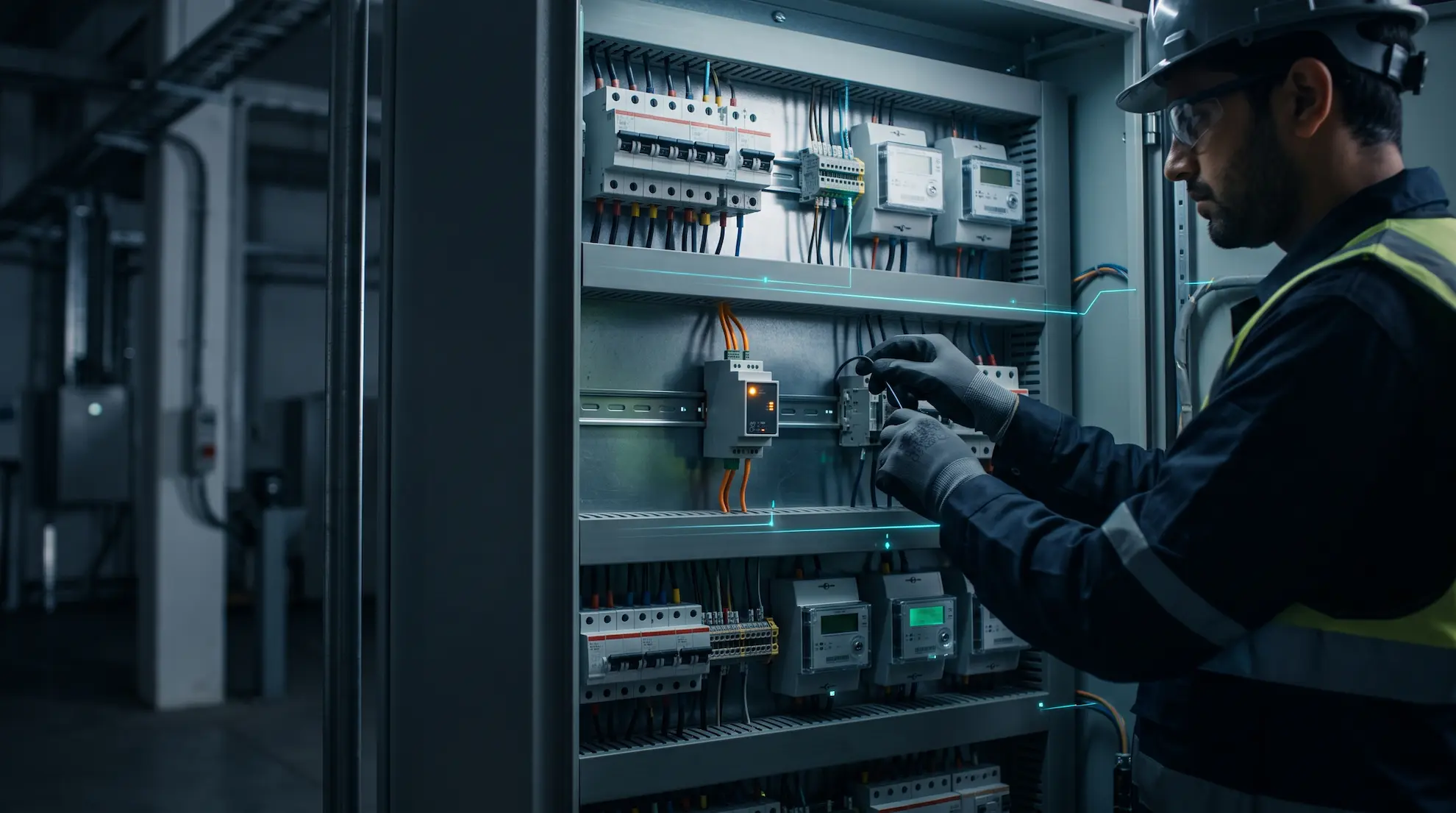
- Connectivity: gateways that read those devices over protocols such as Modbus or RS485 and send the data securely to a platform.
- Software: dashboards, alarms, reports and analytics that turn readings into decisions.
A quote should price all three. If one is missing, ask why.
What determines the cost
| Cost driver | Why it matters | How to keep it down |
|---|---|---|
| Number of monitoring points | Each meter, machine or sensor needs wiring and configuration | Start with incomers, generators and the largest loads |
| Existing equipment | Meters and PLCs that already exist can often be read directly | Ask the supplier which of your devices they can reuse |
| Utilities covered | Compressed air, boiler gas and fuel add sensors beyond electricity | Add utilities in a second phase |
| Gateway type | A data concentrator costs less than a controller with inputs and relays | Use controllers only where you need direct sensor inputs or control |
| Site layout | Long cable runs and several buildings add installation work | Use Ethernet, Wi-Fi or GSM uplinks where cabling is hard |
| Deployment | Hosted or on-premises servers | Choose hosted unless your policy requires on-premises |
| Integrations | Links to SCADA, ERP or a BMS add engineering time | Agree on exports or reports first, and integrate later |
Questions to ask every supplier
- Which of my existing meters, PLCs and VFDs can you read without replacing them?
- Which protocols do your gateways support?
- Is the platform hosted, on-premises, or both?
- How is data encrypted, and who can see it?
- How long does installation take, and will production need to stop?
- Who supports the system after go-live, and where are they based?
Ask each supplier to quote against the same list of monitoring points. Otherwise you are comparing different systems, not different prices.
Start small, then expand
You don't have to monitor everything on day one. A phased rollout spreads the cost and proves the value first:
- Phase 1: main incomers, generators, solar and the largest loads.
- Phase 2: individual production lines and utilities such as compressed air and boilers.
- Phase 3: machine health and predictive maintenance on critical equipment.
Is it worth it?
An EMS pays for itself when it shows you waste you can act on: equipment running with no production, generators carrying load the grid could carry, compressed air leaking overnight. Without measurement, these costs stay hidden in the monthly bill.
En-Stream estimates up to 25% potential energy savings. This is an estimate, and actual results depend on site conditions and equipment.
How En-Stream prices a project
Every En-Stream quote is sized to your site: the number of meters and machines, which gateways you need, and whether you choose hosted or on-premises. Most installations take 1–3 days on site, and we send a fixed quote within 2 working days of a 30-minute call.
Request a quote for your site.
Frequently asked questions
Do I need to replace my existing meters?
Usually not. En-Stream gateways read the energy meters, PLCs and VFDs you already have over Modbus TCP, Modbus RTU and RS485.
Is a hosted EMS cheaper than on-premises?
Hosted usually costs less upfront because you don't buy or maintain servers. On-premises suits sites whose policy requires data to stay inside the plant. En-Stream offers both.
Can we start with one building or one line?
Yes. Most sites start with the main incomers and the largest loads, then add lines and utilities once the first phase is running.
News and analysis on energy policy, tariffs and industrial monitoring in Pakistan, from the team at En-Stream.